Plantain: Materia Medica
Société Apothecary
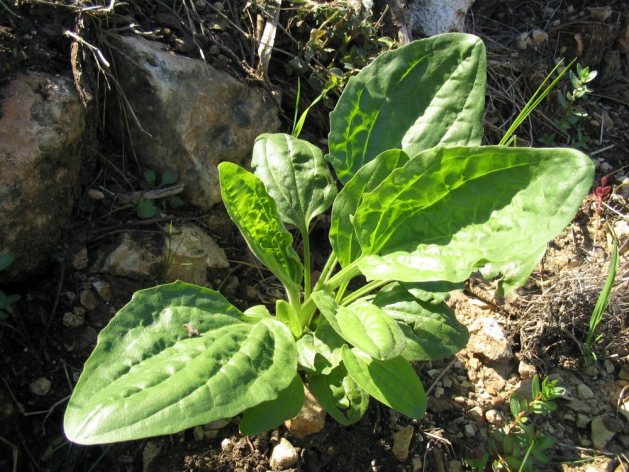
SUMMARY Commonly considered a weed, Plantain is abundant in lawns and fields in spring and summer throughout the Northeast. This humble plant is a medicinal powerhouse offering multiple benefits for digestive, respiratory, and urinary systems as well as topical applications. MATERIA MEDICA Latin Binomials: (Plantago major, P. lanceolata, P. Psyllium; Plantago asiatica primarily used in Chinese medicine) Common Names: Plantain, ribwort, white man’s footprint, rabbit ears TCM Name: Che Qian Cao, Che Qian Zi (seeds) Meridians/Organs affected: bladder, small intestine, gall bladder) Ayurvedic Names: Tamil: Ishappukol vitai, Hindi: Lahuriya, Luhuriya, Urdu: bartang Family: Plantaginaceae Physical Description of the Plant: Greater plantain is usually perennial, with a short rootstock set with long fibrous roots and five to seven-veined leaves arranged in a basal rosette. Each plant grows long, upright or ascending flower stems carrying cylindrical spikes densely covered with flowers. The yellow anthers hang conspicuously from the small yellowish-green flowers to facilitate wind pollination. The style protrudes from the flower long before flowering to prevent self-pollination. The outer coat of the small seeds swells up and becomes sticky when moistened, so they are readily distributed by man and animal. It blooms from May to August. Habitat: Native to Europe and temperate regions of Asia, plantain is widely naturalized throughout the world. It is commonly referred to as “whiteman’s footprint” as it followed the spread of western culture through colonialization. Harvest and Collection: Common plantain a perennial to zone 2. It is normally wildcrafted.. The leaves are gathered throughout the summer before flowering. Two to four harvests are possible annually. Parts Used: leaf and seeds. Husks for P. psyllium. Qualities: relaxing expectorant, tonifies mucous membranes, reduces phlegm; antispasmodic, topically healing, diuretic, alterative, astringent, refrigerant, vulnerary. Chemical Constituents: Iridoid glycosides (aucubin, catalpol); tannins; polysaccharides (galactose, glucose, xylose, arabnose, and rhamnose IE mucilage); alkaloids (plantagonine, asperuloside); flavonoids (baicalein, apigenin, scutellarin, nepetin, hispidulin, luteolin, plantagoside), sugars, triterpenes, linoleic acid, tannins, iroids, silica, plant acids, and mucilage. Aucubin increases uric acid excretion by the kidneys; apigenin is anti-inflammatory. Also provides beta carotene and calcium. Actions: Diuretic: Plantain is a highly effective diuretic used in flushing treatments for the kidneys and urinary tract and the treatment of urinary tract infections. The combination of demulcent and astringent makes it beneficial for urinary tract infections marked by heat, inflammation, dryness and bleeding, where the mucosal membranes are irritated and need a soothing action. In this way it helps to increase the tone of the mucosal membranes, but also helps to sooth, cool and moisten them up. Thus it could be seen as both a relaxant/demulcent diuretic, as well as a tonic/astringent diuretic. Astringent/Vulnerary: This is likely the most widely used action found in Plantain. The astringency helps to staunch bleeding in cuts, scrapes, and other types of bleeding wounds topically, but can also stop bleeding internally as well. For internal bleeding it works best on the urinary tract, but could also be applied to the digestive system as well. One of the unique things about Plantain is that while it is astringent and drying on one hand, it is also demulcent, soothing, and moistening on the other. Demulcent: This is one of our great demulcent remedies for treating dry conditions in the mucosal membranes lining the urinary tract, respiratory and digestive systems. The demulcent property of Plantain comes out best in fresh preparations of the plant as compared to dried leaves, which I find are a bit more astringent. Again this combination of demulcent with astringency makes Plantain a highly unique medicine, and these two actions makes it quite specific for tissues that are bleeding and need astringency, but are also dry, atrophic, and cracking and thus need the soothing qualities of a demulcent. It contains a wide variety of polysaccharides which are responsible for its demulcent properties, as well as a slight immunostimulation. Inflammation Modulating: This is a fantastic remedy for treating inflammatory conditions in the organ systems of which it is specific for, most notably the urinary, respiratory and digestive systems, and of course topically. It is a quite specific for the heat/excitation tissue state in these systems. Again the term “inflammation modulating” is preferable to “anti-inflammatory” as most herbal medicines do not completely shut down the bodies inflammatory processes, but rather slightly adjusts them so they are not overly expressed. It’s critical in our model of holistic herbalism to realize that inflammation is a critical and necessary intelligent response of the body and a vital healing process. Antiseptic: Plantain contains a small handful of constituents which have exhibited antiseptic properties making it beneficial in the treatment of infections. It can be used for old infections that have never fully cleared. It is most commonly used topically in this regard, but also has applications for internal infections as well- most often in the urinary tract, but can also be used in the respiratory and digestive systems as well. While some constituents are directly antiseptic, it’s also worth noting that the variety of polysaccharides present in the leaves also exert a local immunostimulant property, as these sugar compounds can mimic the proteins present on pathogenic antigens that the immune system responds to. Moistening Expectorant: This remedy is a highly useful expectorant for the lungs which is primarily due to its demulcent property. In this regard it is specifically used for dry coughs and is likely contraindicated in a predominantly wet cough. As such, it can be used in formulation with other demulcent expectorants or combined with more stimulant expectorants to make them a bit less harsh. Indications: Common plantain quickly staunches blood flow and encourages the repair of damaged tissue. It may be used instead of comfrey in treating bruises and broken bones, all types of cuts, scrapes, lacerations, puncture wounds (though St. John’s Wort might be better here), stings, insect bites, and all other open skin injuries. This makes it a most important first aid remedy and should be the first plant used in any type of venomous snake bite, poisonous spider bites (brown recluse, black widow etc.), and tick bites, to more mild ones such as mosquito bites, poison ivy or poison oak rashes and bee stings. Traditional Chinese medicine uses plantain to treat urinary problems, dysentery, hepatitis and lung problems, especially asthma and bronchitis. The seeds are used for bowel ailments. Contraindications/Cautions: There are no known contraindications with Plantain, although some people do have allergic reactions from the ingestion of psyllium husks. The primary energetic property of plantain is cooling, so it should be avoided in constitutions or tissue states marked by an excess of cold. Drug Interactions: Plantain has been shown to possibly decrease the absorption of lithium through the gastrointestinal tract. This interaction was due to ingestion of the husk of Plantago psyllium as a bulking laxative. There is a theoretical interaction of Warfarin antagonism due to the relative amount of Vitamin K found in Plantain leaves, which would increase the potential for coagulation. Tastes: Plantain has a primarily bitter taste, with combinations of astringency and a sweet/ mucilaginous flavor. These tastes indicate an action and affinity for the mucosal membranes of the body and the digestive apparatus. It’s always interesting to find plants that are equally astringent and mucilaginous, revealing a unique combination of drying and moistening properties which is somewhat rare in medicinal plants. Dosage: Tincture: Make from fresh leaves if possible. Good for heavy mucus, as in allergic rhinitis, or if astringency is needed. Use a mid-range alcohol to water menstruum, 50% alcohol at a 1:3 ratio- stronger if possible. Dosage can range from small (1-5 drops), up to larger amounts (2-3 mL). Poultice: Apply fresh leaves to bee stings and slow-healing wounds; a simple spit poultice has always been found to be highly effective. Salve: