Mugwort: Materia Medica
Société Apothecary
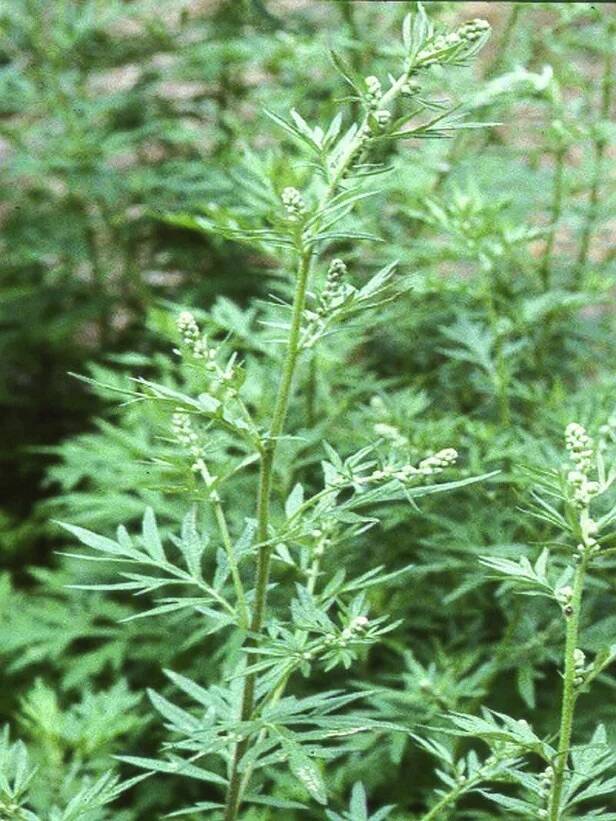
\ \ Mugwort]( https://www.societeapothecary.com/s/search?q=mugwort ) SUMMARY A classic herb in both medicine and magic, Mugwort has a long history of use as a dream herb, helping to bring about lucid and pleasant dreams. Mugwort and all Artemesia species can also be used as a substitute for white sage in smudge bundles for clearing negative energies. MATERIA MEDICA Latin Binomial: Artemisia vulgaris Common Name(s) : Mugwort, common mugwort, cronewort, sailor's tobacco TCM Name : Ài (or àicǎo), Ai Ye Ayurvedic Name(s) : Nagadamani Family: Asteraceae or Compositae Physical Description of the Plant: Mugwort is a tall shrubby spreading perennial, with stems that can grow up to 8’, or as low as 18" in city lots and road sides. The leaves are smooth and dark green above and silvery grey beneath. They are alternate, pinnately lobed, and segmented. The small greenish yellow flowers are borne in panicled spikes. Blooming is from July to October. Habitat: Mugwort is a perennial herb native to Africa, temperate Asia, and Europe, widely naturalized in most parts of the world, and found growing by roadsides and waste land. Mugwort prefers slightly alkaline, well-drained loamy soil, in a a sunny location. Can be intrusive in a garden, growing up to 8 feet tall and spreading underground by stolons. Harvest and Collection: For internal use, harvest mugwort leaves at the end of summer before it flowers. Roots may be harvested in fall. For use as an incense or in a dream pillow, harvest during flowering/seeding. Parts of the Plant Used: Flowers, leaves, roots Qualities: Mugwort has a warming quality, which is particularly soothing to the lower organs - kidneys, gallbladder, liver, stomach, and the female reproductive organs. It increases stomach acid and bile production, eases gas and bloating, improves digestion and the absorption of nutrients, and strengthens the entire digestive system. Energetics: Aromatic, spicy and bitter Chemical Constituents: Acrid resin Coumarin derivatives Essential oil (thujone) Flavonol glycosides Sesquiterpene lactones Tannins Triterpenes Volatile oils containing 1,8-cineole, artemisin Actions: Western: Abortifacient Antidepressant Anthelmintic Antibacterial Anti-inflammatory, Antiseptic to digestive tract Antispasmodic Bitter tonic Carminative Cholagogue Diaphoretic Emmenagogue Mild narcotic Mild nervine Vermifuge Eastern: Meridians: Spleen, kidney, liver. Moxibustion is a common practice in TCM often applied before acupuncture or in conjunction with acupuncture. Moxa is a special preparation of Mugwort that makes is easier to use for burning. It is fragrant, flammable, and when burning brings heat and warmth to an area. This heat and warmth are good for warming associated channels to dispel cold, strengthen Yang-Qi, remove stasis of the blood, and to dissipate stagnation. Indications: Anorexia Atonic gastritis Congestive dysmennhoroea Delayed menstruation Depression and tension Worm infestations Mugwort's powerful anti-parasitic and anthelmintic properties are indicated for cases of parasitic bacteria or worm infections in the gut. It will kill the pathogens, is strongly astringent and drying, and will help slow or stop diarrhea often associated with these types of infections. Its warming carminative and bitter properties will also help sooth gas, bloating, and digestive discomfort. Contraindications/Cautions: Not recommended for pregnant or nursing women; may be poisonous in large doses; may cause dermatitis on skin contact for some people. May cause an allergic reaction for those with allergies to the Asteraceae/Compositae plant family. Drug Interactions: There are no known plant-medication interactions at present. Dosage: Tincture : 5-20 drops twice daily. Infusion: Steep 1 tsp. dried herb in one cup boiling water, take in mouthful doses throughout the day. Mugwort can also be smoked for either medicinal or metaphysical purposes. Combinations: Combine with lavender and catnip, as tea or in dream pillows. Can also be combined with Motherwort and Blue Vervain. Folklore: The herb is named for the Goddess Artemis, the protector of women and children. It is also associated with the god Thor, who wore a belt of mugwort that was said to protect him and refresh his tired legs on long journeys. Anglo-Saxons listed Mugwort as one of the ‘Nine Sacred Herbs” given to the world by the God Woden. It is still used to induce lucid dreams or astral projection by smoking the herb or drinking it as a tea. It is said to enhance whatever level of dreaming one has achieved. If one cannot remember one's dreams, Mugwort will help to develop this ability. If one is at the next level of dreaming, cognitive dreaming (being aware one is dreaming and being able to "manipulate" the dream at will), Mugwort will enhance this. The final level is precognitive dreaming; dreaming of future events. Flower Essence: Artemisia douglasiana, a close relative of Artemisia vulgaris, is used for clarity in dream work. It helps us to interpret our dreams and merge the knowledge and insights gained in dreams and spiritual/magickal work into our everyday lives. It also helps to regulate menstrual cycles in time with the Moon. Applications: Good for the digestive tract and its functions; helps to treat parasitic infections, expel intestinal worms; helps to regulate irregular or suppressed menstruation. The leaves have an antibacterial action, inhibiting the growth of Staphococcus aureus, Bacillus typhi, B. dysenteriae, streptococci, E. coli, B. subtilis, and pseudomonas. A weak tea made from the infused plant is a good all-purpose insecticide. The fresh or the dried plant also repels insects. Homeopathic Artemisia vulgaris: Epilepsy, petit mal, hysteria, over excitement and fright, sleepwalking, some types of dizziness. Irregular, painful or scanty menses. Prolapsed uterus. To prevent miscarriage with severe cramping. Recipes: Mugwort was used in beer recipes before hops became the standard. Mugwort Soup Ingredients: 3 tablespoons unsalted butter 1 medium onion or 3 small spring onions, thinly sliced (about 2 cups) 2 cloves garlic, minced 10 medium white mushrooms (about 7 ounces), sliced 1 large Yukon Gold or russet potato (about 14 ounces), peeled and cut into 2-inch pieces 6 cups low-sodium chicken or vegetable broth 1 cup heavy cream 4 ounces tender mugwort (Artemisia vulgaris) or watercress leaves (about 8 cups) Tabasco Coarse salt and freshly ground pepper Directions: 1. Melt butter in a large pot over medium heat. Add onion and saute until softened, about 4 minutes. Add garlic and mushrooms; cook until softened, about 3 minutes. Add potato and broth; bring to a boil. Reduce heat. Simmer until potato is tender, about 20 minutes. 2. Add cream and mugwort, and simmer 10 minutes. Remove from heat and let cool slightly. Puree soup in batches in a blender until smooth. Return soup to pot. Add Tabasco to taste; season with salt and pepper. Scientific Research: Moxibustion for the Correction of Nonvertex Presentation: A Systematic Review and Meta-Analysis of Randomized Controlled Trials https://www.ncbi.nlm.nih.gov/pmc/articles/PMC3789399/ Coyle ME, Smith CA, & Peat B. (2012). Cephalic version by moxibustion for breech presentation. Cochrane Database of Systematic Reviews 2012, Issue 5. Art. No: CD003928. https://www.ncbi.nlm.nih.gov/pubmed/22592693 Vas J, Aranda-Regules JM, Modesto M, et al. (2013). Using moxibustion in primary healthcare to correct non-vertex presentation: a multicentre randomised controlled trial.Acupuncture Medicine 31: 31-38. http://www.ncbi.nlm.nih.gov/pubmed/23249535 References: https://altnature.com/gallery/mugwort.htm https://altnature.com/thegarden/Mugwort.html https://altnature.com/thegarden/smudge.htm https://materiamedicaresource.wordpress.com/2013/08/04/mugwort/ https://www.goldenpoppyherbs.com/blog/mugwort-materia-medica Mugwort Herb (Ai Ye). (n.d.). Chinese Herbs Healing. http://www.chineseherbshealing.com/ai-ye-why-mugwort-leaf-stops-bleeding / https://www.starchild.co.uk/default.aspx?appid=6564&pid=3571 https://www.marthastewart.com/964317/mugwort-soup Three Mugwort Recipes to Try at Home Mugwort Dream Tea 1 teaspoon dried mugwort leaves 1 teaspoon chamomile flowers 1 cup boiling water Honey or lemon, to taste (optional) Combine the mugwort and chamomile in a tea infuser or teapot. Pour boiling water over the herbs and let steep for 5-10 minutes. Strain the tea into a cup and add honey or lemon if desired. Sip slowly before bedtime to encourage vivid dreams. Always consult with a qualified practitioner before using herbs, especially if pregnant or nursing. Mugwort Herbal Infused Oil 1 cup dried mugwort leaves 1 cup olive oil or sweet almond oil A clean, dry jar with a lid Place the dried mugwort leaves in the jar, filling it about halfway. Pour the oil over the mugwort, ensuring the leaves are completely submerged. Seal the jar and place it in a warm, sunny spot for 2-4 weeks, shaking gently every few days. Strain the oil through a fine mesh strainer or cheesecloth into a clean bottle. Use this soothing oil for massage or as a relaxing bath addition. Always consult with a qualified practitioner before using herbs, especially if pregnant or nursing. Mugwort Smudge Stick Fresh mugwort sprigs Natural twine or cotton string Gather several sprigs of fresh mugwort, about 8-12 inches long. Bundle the sprigs together, aligning the stems at one end. Use the twine to tightly wrap the bundle from the stems to the tip, leaving a loop at the end if desired. Hang the bundle upside down in a dry, well-ventilated area for 1-2 weeks, until fully dried. Use the smudge stick to cleanse spaces by lighting the tip and allowing the smoke to waft through your surroundings. Always consult with a qualified practitioner before using herbs, especially if pregnant or nursing.