Materia Medica: Horse Chesnut
Société Apothecary
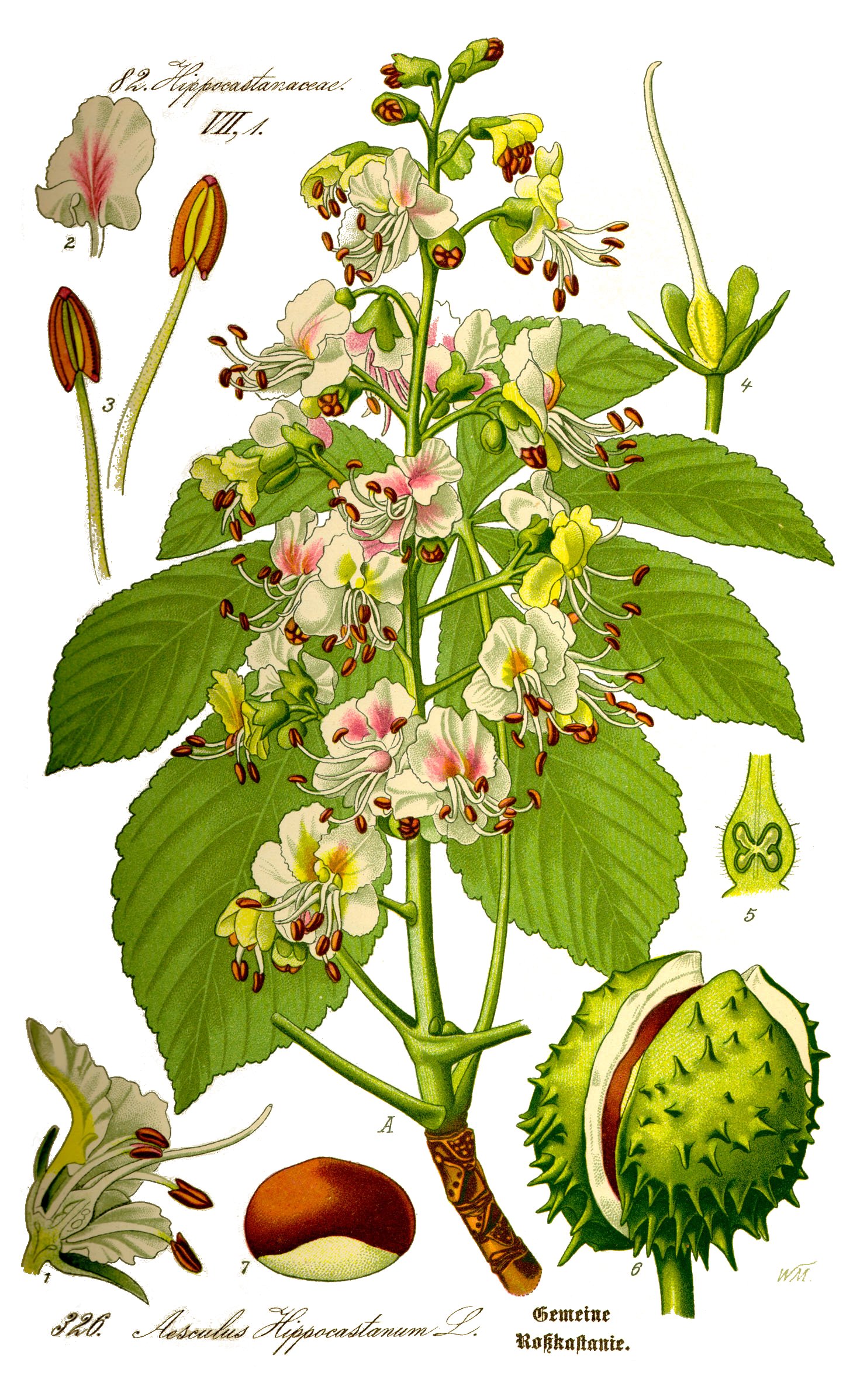
Horse Chestnut: Materia Medica A striking tree with palmate leaves and candle-like blossoms, Horse Chestnut has long stood as a symbol of resilience—and a reliable ally in circulatory care. Its glossy seeds, often found tucked in a pocket for luck, also contain potent medicine for veins, swelling, and stagnation. “For veins that falter and legs that swell, the chestnut’s wisdom serves us well.” Latin Binomial : Aesculus hippocastanum Common Name(s) : Horse Chestnut, Buckeye (not to be confused with American Buckeye), Conker Tree TCM Name : Not commonly used Ayurvedic Name : Not traditionally included in Ayurvedic materia medica Family : Sapindaceae (Soapberry family) Horse Chestnut is a tall, deciduous tree reaching up to 100 feet, known for its large, hand-shaped compound leaves and showy white-to-pink flower spikes in spring. In fall, it drops its iconic shiny brown seeds (the “conkers”) encased in spiky green husks. It is native to the Balkan region of southeastern Europe but widely naturalized across Europe and North America, often found in parks, along streets, and in cultivated gardens due to its grand stature and ornamental value. Seeds are gathered in autumn when mature and glossy. While bark and leaves are sometimes used, the seeds are by far the most common medicinal part, rich in aescin. Parts Used : Seeds (nuts), occasionally bark or leaves (with caution) Qualities : Drying, astringent, tonifying Energetics : Cool, dry, slightly bitter Chemical Constituents : Aescin (a triterpenoid saponin), flavonoids (quercetin, kaempferol), coumarins (aesculin), tannins, starch, and fatty oils. Actions : Venotonic (tones veins), anti-inflammatory, astringent, antiedematous (reduces fluid retention), capillary-strengthening, mildly analgesic Indications : Chronic venous insufficiency (CVI), varicose veins, hemorrhoids, edema (especially of the lower limbs), bruising, sprains, swelling, heavy legs, tired feet, nighttime leg cramping, and post-surgical or injury-related swelling. Diagnostic Picture : Horse Chestnut is ideal for individuals experiencing vascular stagnation—feelings of heaviness, puffiness, or throbbing in the legs, often worsened by standing. Veins may appear purple or bulging. Also useful where bruising or capillary fragility is an issue. Contraindications & Cautions : Raw seeds are toxic if ingested—always use properly prepared extracts. Not recommended during pregnancy or lactation without professional guidance. Internal use should be standardized and supervised due to aescin content. May cause GI upset or dizziness in sensitive individuals. Drug Interactions : May enhance the effects of blood thinners like warfarin. Use caution with medications that affect circulation or blood pressure. Dosage : Standardized extract (containing 100–150 mg aescin per day) is commonly used for internal support. Topical creams or gels containing 2–5% aescin are applied to affected areas 1–3 times daily. Tinctures (1:3 in 40% alcohol) are used at 2–4 mL/day internally (professional use only). Infused oils may be used externally on swollen or sore veins. Combinations : Combine with Witch Hazel or Butcher’s Broom for hemorrhoids and vein health, Gotu Kola or Yarrow for microcirculation, Calendula for topical anti-inflammatory support, or Arnica for trauma, bruising, or swelling. Folklore : Horse Chestnut seeds were once carried as lucky charms or placed in windows to ward off rheumatism and negative energy. Children in Europe still play “conkers” with the seeds. Traditionally, the tree has been associated with strength and protection, mirroring its role in supporting the vascular system. Applications : Use Horse Chestnut gel or balm for varicose veins, edema, or tired legs. Combine with Witch Hazel and Calendula for a hemorrhoid-relief salve. Add standardized extract to a foot soak to relieve swelling. Make a soothing balm with infused oil and beeswax for topical circulation support. Scientific Research : Clinical trials support Horse Chestnut seed extract (HCSE) as a safe, effective treatment for chronic venous insufficiency. Studies have shown it can reduce leg swelling, discomfort, and fatigue—sometimes as effectively as compression therapy. Topical applications are widely used and generally well-tolerated. References : Blumenthal, M. The Complete German Commission E Monographs Hoffmann, D. Medical Herbalism Bone, K. & Mills, S. Principles and Practice of Phytotherapy https://www.ncbi.nlm.nih.gov/pmc/articles/PMC3683592/ https://www.herbalgram.org https://www.mountainroseherbs.com Check out our Horse Chestnut Products ! Three Horse Chestnut Recipes to Try at Home Horse Chestnut Infused Oil 1 cup dried horse chestnut seeds, chopped 2 cups carrier oil (such as olive or almond oil) Glass jar with lid Place the chopped horse chestnut seeds into the glass jar. Pour the carrier oil over the seeds until fully submerged, leaving some space at the top of the jar. Seal the jar tightly and shake it gently to mix. Store the jar in a warm, sunny spot for 4-6 weeks, shaking gently every few days. Strain the oil through a cheesecloth or fine sieve into a clean bottle, discarding the solids. Use the infused oil topically as a soothing massage oil for tired legs or varicose veins. Horse Chestnut Tea 1 teaspoon dried horse chestnut leaves 1 cup boiling water Honey or lemon (optional, for taste) Place the dried horse chestnut leaves in a tea infuser or directly into a cup. Pour boiling water over the leaves and cover the cup. Steep for 10-15 minutes to allow the beneficial compounds to infuse. Strain the tea (if needed) and add honey or lemon to taste. Enjoy the tea warm, ideally after meals. Horse Chestnut Salve 1/2 cup horse chestnut infused oil (use the recipe above) 1/4 cup beeswax pellets 10 drops lavender essential oil (optional) In a double boiler, gently heat the horse chestnut infused oil and beeswax pellets until the beeswax is fully melted. Remove from heat and add the lavender essential oil, stirring to mix well. Pour the mixture into small, clean containers or tins and allow it to cool and solidify. Once set, use the salve on skin for relief from minor aches and skin irritations. Store in a cool, dry place and use within six months. Always consult a qualified healthcare practitioner before using herbal remedies, especially if you are pregnant, nursing, or on medication.