Linden: Materia Medica
Société Apothecary
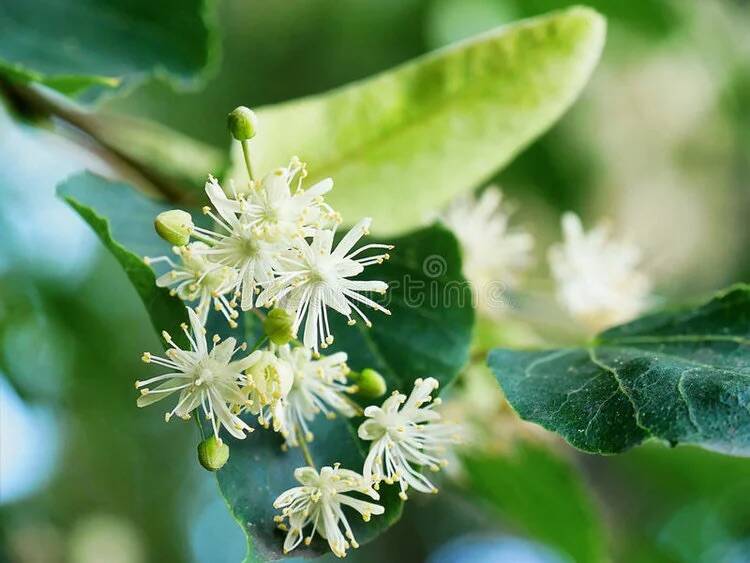
Linden Herb SUMMARY The sweetly scented flowers of the Linden trees lining city streets and stately European allées attract honeybees, and make a delicious tea that reduces anxiety and fevers, soothes the gut, and improves circulation. Linden medicinal uses span centuries of European and North American herbal tradition, and modern research is beginning to confirm what herbalists have long known about this generous, fragrant tree. MATERIA MEDICA Latin Binomial: Tilia spp. Common Name(s) : American Linden, Littleleaf Linden, Common Lime, Lime Flower, European Linden, Carolina Linden, Carolina Basswood TCM Name : Duan Hua Ayurvedic Name : n/a Family: Malvaceae (Mallow family) subspecies Tiliaceae Physical Description of the Plant: Linden is a deciduous tree reaching from 40 to 100 feet at maturity, with heart-shaped blue-green leaves and intensely perfumed flowers. The leaves have rounded bases that are asymmetrical on either side of the petiole. Flowers bloom in 5-10 flowered cymes. Each cyme droops from a narrow, leaf-like bract, attached to the bract at a point somewhere between the base and midpoint. The fruit produced is a drupe. Habitat: Linden trees belong to the Tilia genus. American Linden and Carolina Linden are native to Eastern North America. European Linden ( Tilia × europaea) and Large-leaf Linden are native to Europe. Littleleaf linden and Silver Linden (Tilia tomentosa) are native to Western Asia and Europe. The common Linden is often used as a street and shade tree. This hybrid is a result of the cross between the large-leaved lime ( Tilia platyphyllos ) and Littleleaf linden ( Tilia cordata ). Some trees are reputed to be over 700 years old. Harvest and Collection: Harvest flowers when they open, in New England typically in early July. Parts of the Plant Used: Flowers and bracts. Qualities: Soothes and relaxes the gut; opens the arteries, reduces hypertension, protects blood vessel walls, reduces cholesterol buildup, increases blood flow to the periphery; reduces fevers, relieves tension and anxiety; clears toxins through the kidneys. Energetics: Slightly sweet, aromatic, slightly astringent, moist, slightly warm Chemical Constituents: Antioxidant flavonoids (astralagin, galactoside, hespiridin, hyperoside, kaempferol, myricetin, quercetin, quercitrin, rutin, tiliroside ) Mucilage (in the bract) (arabino-galactans) Phenolic acids (caffeic acid) Phytosterols (β-sitosterol) Proanthocyandins Quercetin glycosides Tannins Volatile/essential oil, up to about 0.l% (camphor, carvone, citral, citronellol, eugenol, farnesol, geraniol, limonene, linalool) Actions: Western: Anti-inflammatory Anti-spasmodic Astringent Cholagogue (bark) Demulcent Diaphoretic Diuretic Emmenagogue Emolient (bark) Expectorant Hypotensive Nervine Opthalmic Sedative Vermifuge (root) Vulnerary Eastern: Meridians: Lung, Liver. Releases to the Exterior/Clears Wind Heat: colds, fever, no sweating, cough. Moves Qi/Relieves Stagnation/Calms Shen: palpations, insomnia, abdominal cramps, anxiety, shortness of breath. Promotes Urination/Softens Nodules: urinary stones, arteriosclerosis, headaches, skin rashes. Clears Liver Heat/Stops Bleeding: nosebleeds, epistaxis. Indications: Feverish colds and flu, bronchitis, asthma; nervous tension, anxiety, insomnia, migraines; cystitis, indigestion, heartburn. Contraindications/Cautions: Excess long-term use could cause heart damage. Drug Interactions: Linden is generally regarded as safe (GRAS) by the FDA. Use with caution if taking blood pressure medications, as it could potentiate their effect. Dosage: Tincture : take l-2ml of the tincture three times a day. Infusion: l teaspoonful of the blossoms in a cup of boiling water; infuse for l0 minutes. Drink three times a day. For a fever, use 2-3 teaspoonfuls. Combinations: Can be combined with Lemon Balm, Chamomile, and Catnip to soothe nerves and upset stomach. For high blood pressure combine with Hawthorn and European Mistletoe, with Hops for nervous tension and with Elder Flower for colds and flu. Folklore: According to Greek Mythology, Linden trees were once a nymph named Philyra who gave birth to the centaur Chiron. One of the old Celtic legends states that if you sit under a linden tree you will be cured of epilepsy. In Roman and German folklore the linden tree is considered the "Tree of Lovers," and in Polish folklore the wood is good protection against both the evil eye and lightning. The charcoal from- linden wood was sometimes used externally for wounds and internally for halitosis, spasmodic cough, night sweats, and fever. Linden blossoms have been used as a base for perfumes. Some beekeepers cultivate lindens for honey production. Flower Essence: Calms emotional turmoil and high anxiety. Useful for those who hold tension in the body and mind, unable to move out of a constricted or contracted state. Softens and opens the emotional body, addressing the fear and pervasive worry present. Linden flower helps to release emotional blocks and engenders warmth and openness. It increases awareness of our connection to the rest of humanity, relaxes and softens communication between people and strengthens the relationships between loved ones. Applications: Arterial support, migraine headaches, hypertension and palpitations due to stress, digestive issues. Recent studies show Linden tea helps prevent childhood ear infections. Linden Medicinal Uses: A Closer Look Among the most beloved linden medicinal uses is its role as a gentle yet effective nervine — one that calms without dulling. Below is a closer look at the key areas where linden flower has been applied traditionally and, increasingly, supported by emerging research. Anxiety, Stress & the Nervous System Linden's most celebrated medicinal use is its capacity to ease nervous tension, anxiety, and sleeplessness. The volatile oils and flavonoids present in the flowers are thought to contribute to its mild sedative and anxiolytic effects. Herbalists reach for linden when someone is wound tight — carrying stress in the chest, the belly, the jaw. A warm cup of linden flower tea before bed is one of the simplest and most time-honoured ways to soften the edges of a difficult day. For heightened anxiety, linden combines beautifully with Lemon Balm and Chamomile. Fever, Colds & Respiratory Support As a diaphoretic herb, linden encourages a healthy sweat response, making it particularly well-suited to the early stages of a feverish cold or flu. It helps the body do what it already knows how to do — open the pores, release heat, and move through illness more efficiently. Combined with Elder Flower, linden is a classic European remedy for seasonal respiratory complaints, bronchitis, and congested sinuses. Cardiovascular & Circulatory Health One of linden's lesser-known but well-documented medicinal uses is its support for the cardiovascular system. As a hypotensive herb, it gently dilates the blood vessels, easing hypertension and encouraging blood flow to the periphery. Its flavonoid content — including rutin and quercetin — helps protect vessel walls and reduce cholesterol buildup over time. For those experiencing palpitations rooted in stress or nervous tension, linden's dual action on both the heart and the nervous system makes it a quietly powerful ally. It combines well with Hawthorn for broader cardiovascular support. Digestive Ease Thanks to the mucilage found in linden's bracts, the herb has a gentle demulcent and antispasmodic effect on the digestive tract. It soothes and coats irritated tissues, making it useful for heartburn, indigestion, and gut cramping linked to stress or nervous tension. This is a good example of linden's whole-body approach — calming the nervous system while simultaneously soothing the gut that bears the brunt of that tension. Immune Modulation Emerging research (see the scientific study below) points to linden flower's polysaccharides as immunomodulating agents — supporting the activity of immune cells in the gut's Peyer's patches. While research is still in its early stages, this adds another dimension to linden medicinal uses beyond its traditional nervine and diaphoretic applications. As always, consult a qualified practitioner if you are exploring linden for immune support alongside other health conditions or medications. Recipes: Linden Flower Honey Ingredients Fresh linden flowers Honey Clean, dry jar with a tight fitting lid Directions Loosely fill your jar with freshly harvested linden flowers. Cover with honey. Check back on your honey after a couple of hours and add more if needed. Let the flowers infuse in the honey for at least a couple of days. Turn the jar occasionally to make sure that the flowers stay coated in the honey. After a couple of days you can strain the flowers out if you wish or just leave them in the honey and eat them. Spread your linden honey on baked goods and toast, use it in tea, or even enjoy by the spoonful! Scientific Research: Acidic polysaccharide complexes from purslane, silver linden and lavender stimulate Peyer's patch immune cells through innate and adaptive mechanisms. Georgiev YN 1, Ognyanov MH 1, Kiyohara H 2, Batsalova TG 3, Dzhambazov BM 3, Ciz M 4, Denev PN 1, Yamada H 2, Paulsen BS 5, Vasicek O 4, Lojek A 4, Barsett H 5, Antonova D 6, Kratchanova MG 7. Abstract Three polysaccharide complexes (PSCs) were isolated from the aerial parts of common purslane (Portulaca oleracea L.), and the flowers of common lavender (Lavandula angustifolia Mill.) and silver linden (Tilia tomentosa Moench) by boiling water extraction and ethanol precipitation. The chemical composition and immunomodulating effects of isolated PSCs were characterized. The chemical characterization revealed that the three samples contain mainly pectic polysaccharides. They exhibited ex vivo intestinal immunomodulating activity through the murine Peyer's patch-mediated bone marrow cell proliferation test at 100μg/ml concentration. At the same time, they stimulated ex vivo human blood T-cell populations (CD4+/CD25+ and CD8+/CD25+), phagocytic leukocytes (CD14+ and CD64+ cells) and induced IL-6 production from human white blood cells and Peyer's patch cells. The herbal PSCs stimulated ex vivo ROS production from whole blood phagocytes and showed unspecific in vitro anti-proliferative activity against normal and A549, HeLa and LS180 tumor cells. This is the first report on immunomodulating studies of linden flower pectins and chemical and biological activity characterization of lavender polysaccharides. Our study demonstrates that similarly to purslane, lavender and silver linden herbal materials contain immunomodulating polysaccharides that could be useful for support of compromised immune system. References: https://herbies-herbs.com/index.php?\_route\_=linden-p1106 https://www.thespruce.com/meet-ten-species-of-linden-trees-3269657 https://www.mountainroseherbs.com/products/linden-leaf-and-flower/profile http://www.healthy.net/Materia\_Medica/Linden\_Herbal\_Materia\_Medica/240 http://www.herbaltransitions.com/materiamedica/Tilia.htm https://www.goldenpoppyherbs.com/blog/linden-materia-medica/ https://theherbalacademy.com/a-family-herb-linden-flower/ https://www.masterfile.com/search/en/european+allee+trees https://gobotany.newenglandwild.org/species/tilia/americana/ http://www.missouribotanicalgarden.org/PlantFinder/PlantFinderDetails.aspx?kempercode=a917 https://www.whiterabbitinstituteofhealing.com/herbs/linden/ https://woodlandessence.com/products/linden-tilia-americana https://minnesotaherbalist.com/2016/06/17/linden-the-sweet-cooling-harbinger-of-midsummer/ McIntyre, Anne. The Complete HerbalTutor. London: Octopus Publishing Group, 2010, p.163. Three Linden Recipes to Try at Home Linden Flower Tea 2 tablespoons dried linden flowers 2 cups boiling water Honey or lemon (optional) Place the dried linden flowers in a teapot or heatproof container. Pour the boiling water over the flowers. Cover and