Arnica Flower: Materia Medica
Société Apothecary
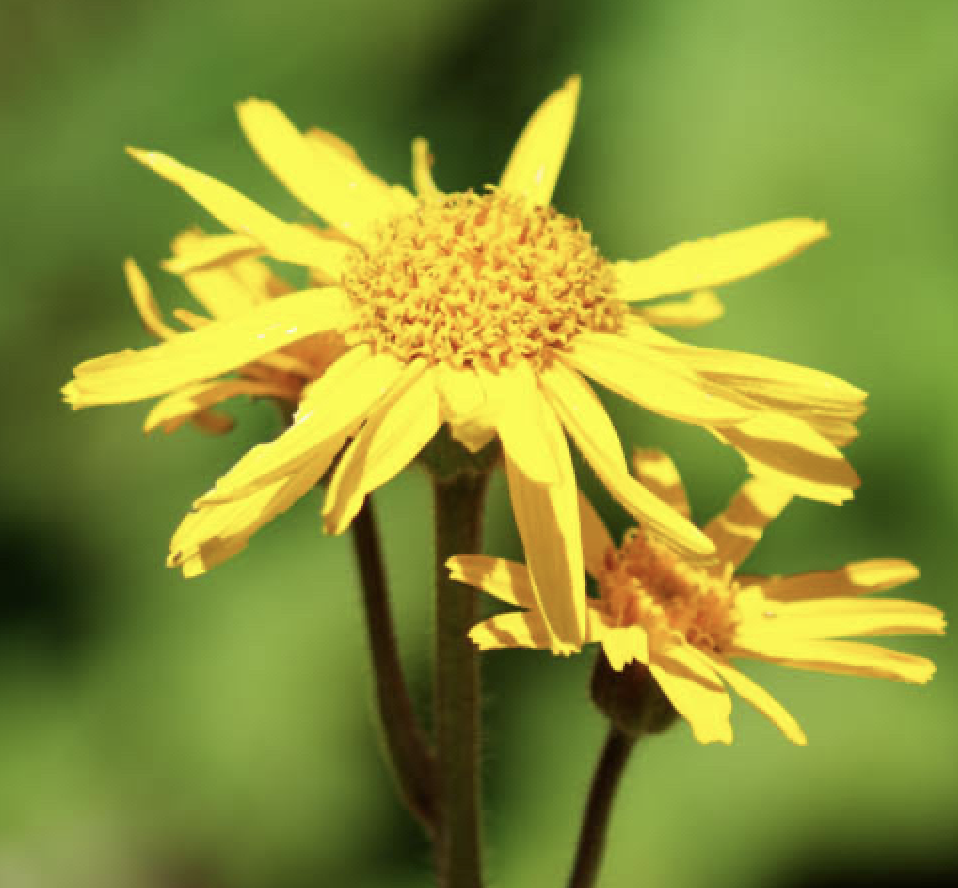
]( https://www.societeapothecary.com/s/search?q=arnica ) Famed for its powerful ability to reduce pain, swelling, and bruising, Arnica is a cornerstone of first-aid and trauma care in herbal medicine. Though potent and potentially toxic if taken internally in its whole form, Arnica is a safe and effective topical ally for injuries, strains, and inflammation. “Arnica calms the cry of injured tissue—soothing bruises, easing pain, and speeding the body’s return to balance.” MATERIA MEDICA Latin Binomial: Arnica montana Common Name(s): Arnica, Leopard’s Bane, Mountain Tobacco TCM Name: Not used in TCM Ayurvedic Name: No direct analog; comparable to local trauma herbs Family: Asteraceae Physical Description of the Plant: A perennial alpine herb with bright yellow, daisy-like flowers. Grows up to 1–2 feet tall with soft, hairy leaves and branching rhizomes. Habitat: Native to mountainous regions of Europe and parts of Siberia. Prefers nutrient-poor, slightly acidic, well-drained soils at high altitudes. Harvest and Collection: Flowers are harvested at full bloom in summer. Dried quickly in low heat to preserve active compounds. Parts of the Plant Used: Flowers (for external use); homeopathic dilutions used internally under guidance Qualities: Pungent, bitter, warming (topical) Energetics: Stimulating, dispersing, resolving stagnation Chemical Constituents: Sesquiterpene lactones (helenalin) Flavonoids Volatile oils Tannins Carotenoids Coumarins Actions: Anti-inflammatory Analgesic (pain-relieving) Antiecchymotic (reduces bruising) Vulnerary (wound healing) Antimicrobial Circulatory stimulant (topical) Indications: Bruises, contusions, and hematomas Muscle soreness and strain Joint sprains or swelling Rheumatic and arthritic pain Post-surgical recovery (topical only) Inflammatory skin trauma (non-broken skin) Diagnostic Picture: Best used when there is trauma, bruising, or tissue injury with swelling and heat. Ideal for acute physical injuries with tenderness, discolored skin, and inflammation—especially where massage and circulation are beneficial. Contraindications/Cautions: Do not apply to broken skin or open wounds Not for internal use in whole herb form (except in homeopathic preparations) May cause allergic reaction in people sensitive to Asteraceae family Avoid during pregnancy unless under professional supervision Drug Interactions: Topical use generally safe with medications, though caution advised near anticoagulants Internal use only in homeopathic form (under practitioner care) Dosage: Infused Oil/Salve: Apply to affected area 2–3x/day Tincture (for external compress): Dilute 1:3 with water; apply as compress Homeopathic Arnica (30C or 200C): As directed for internal trauma support Bath Soak: Diluted tincture or oil in warm bath for sore muscles Combinations: With St. John’s Wort for nerve pain or trauma With Calendula and Comfrey for wound care (non-broken skin) With Ginger or Cayenne in liniments for deep muscle soreness With Chamomile for post-exercise relaxation Folklore: Known since the 16th century in European alpine folk medicine, Arnica was called “Fallkraut” (fall herb) for its use in falls and bruises. Shepherds and hunters carried it for emergencies. It was thought to contain solar warmth, helping it drive out cold and trauma from the body. Applications: Use externally for bruises, strains, and pain relief. Particularly effective when applied soon after injury. A staple in natural first aid kits, especially for athletes, travelers, and manual workers. Homeopathic Arnica is widely used for shock and injury trauma recovery. Recipes: Arnica Trauma Oil Fresh Arnica flowers Olive oil (infused for 4–6 weeks) Use for sprains, bruises, and soreness Pain Relief Salve Arnica-infused oil Beeswax Optional: essential oils of Lavender or Peppermint Apply to sore muscles and bruises Muscle Recovery Bath Arnica tincture or flowers Epsom salts Chamomile flowers Steep in hot water and add to bath Scientific Research: Studies show topical Arnica extracts reduce inflammation, pain, and bruising in soft tissue injuries. Helenalin, its primary active compound, inhibits inflammatory pathways. Homeopathic Arnica is supported by clinical and anecdotal use for reducing trauma shock and improving recovery post-surgery. References: Hoffmann, D. “Medical Herbalism” Mills & Bone “Principles and Practice of Phytotherapy” PubMed articles on Arnica montana German Commission E Monographs Homeopathic Materia Medica and folk herbals Check out our arnica products at Societe. Three Arnica Recipes to Try at Home Arnica Infused Oil for Sore Muscles 1 cup dried arnica flowers 2 cups olive oil or sweet almond oil A clean glass jar with a lid Place the dried arnica flowers in the clean glass jar. Pour the olive or sweet almond oil over the flowers, ensuring they are completely submerged. Seal the jar tightly and place it in a sunny spot for 2-3 weeks, shaking gently every few days. Strain the oil through a cheesecloth or fine sieve into a clean bottle. Massage the infused oil onto sore muscles as needed for relief. Note: Always patch test before using on a larger skin area. Arnica Salve for Bruises 1/2 cup arnica infused oil (from above recipe) 2 tablespoons beeswax pellets 10 drops lavender essential oil (optional) A small tin or jar In a double boiler, gently heat the arnica infused oil and beeswax until fully melted. Remove from heat and add lavender essential oil if using. Pour the mixture into a small tin or jar and let it cool completely to solidify. Apply a small amount to bruises or bumps to help reduce inflammation and discoloration. Avoid applying to broken skin. Arnica and Chamomile Bath Soak 1/2 cup dried arnica flowers 1/2 cup dried chamomile flowers A muslin bag or cheesecloth Combine the dried arnica and chamomile flowers in a bowl. Transfer the mixture into a muslin bag or wrap securely in cheesecloth. Hang the bag under the faucet as you fill your bathtub with warm water, allowing the herbs to infuse. Soak in the aromatic bath for 15-20 minutes to soothe aches and promote relaxation. Consult a qualified practitioner before using arnica, particularly if pregnant or nursing.